Shane Morton

Engineering Projects

CAD work, fabrication, and electronics from coursework at CU Boulder.

Prefer the original slide format? Download the full write-up as a PDF.

Engineering Portfolio (PDF)
Component Design Course Project — Drill Powered Vehicle _▢×
August 2026 – Present In progress Systems & Testing Engineer
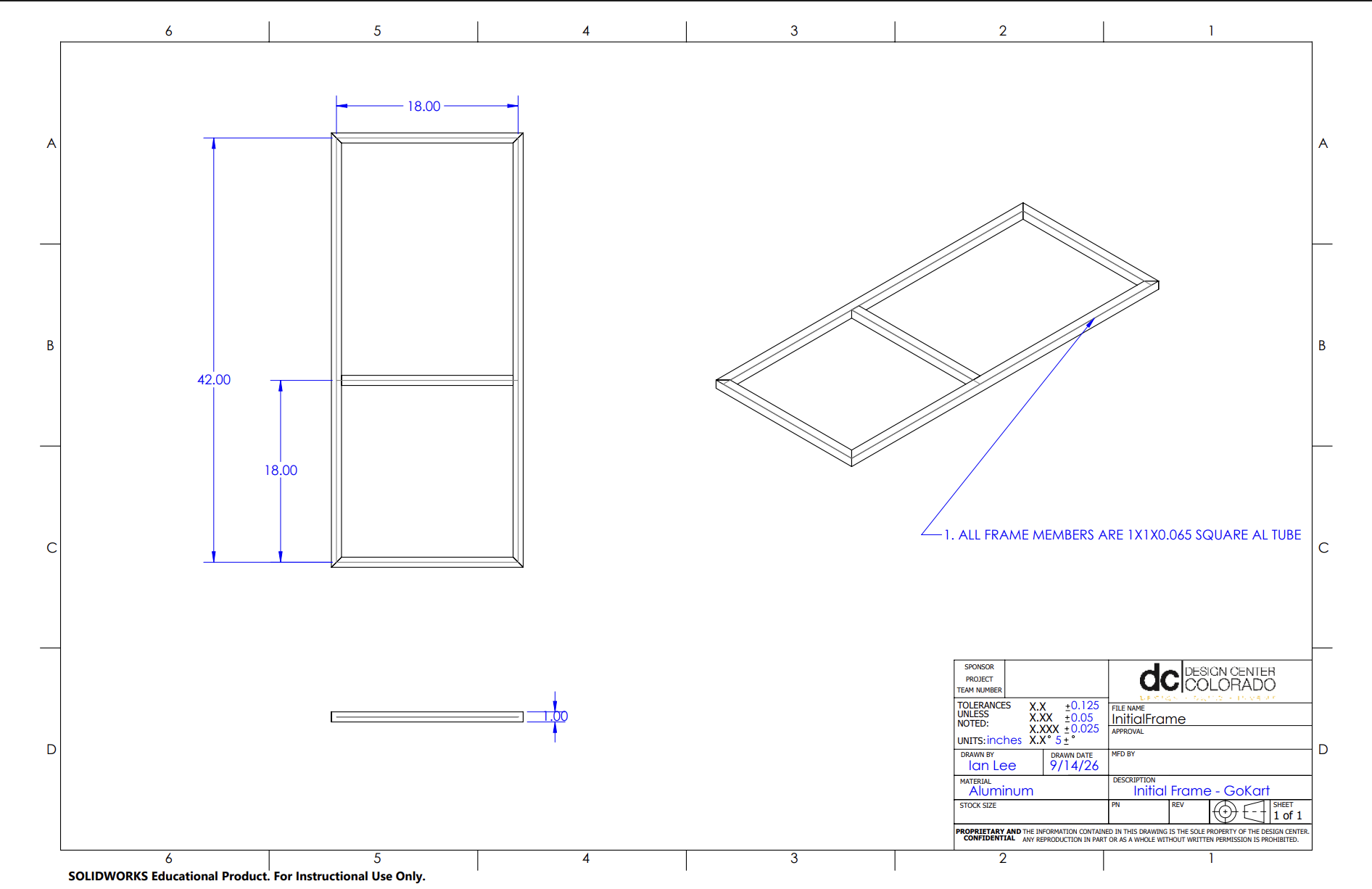
Early CAD sketch and part drawing for the drill-powered vehicle frame

Our team's goal is to build a vehicle powered by a Ryobi cordless drill. It needs to support one driver and complete several maneuverability and load-bearing competitions without failing, and along the way we'll present a PDR and CDR to the manufacturing engineers in the machine shop for approval.

Requirements

  • Minimum of three load-bearing wheels
  • Shorter than 7 ft, under 50 lbs
  • No modifications to the drill itself
  • Custom-manufactured components for the vehicle
  • Total cost under $200

My role

Our team of six splits into a project manager, two CAD engineers, two manufacturing engineers, and me as the systems and testing engineer. So far I've drafted the overall timeline for the semester — meetings, part acquisition, and manufacturing dates — and written our requirements sheet, defining what the vehicle shall do versus what it should do. As a team we've started initial modeling of the frame and are brainstorming the components we'll need.
SolidWorks Course Final Project — Nintendo Switch 2 _▢×
April 2026 Complete
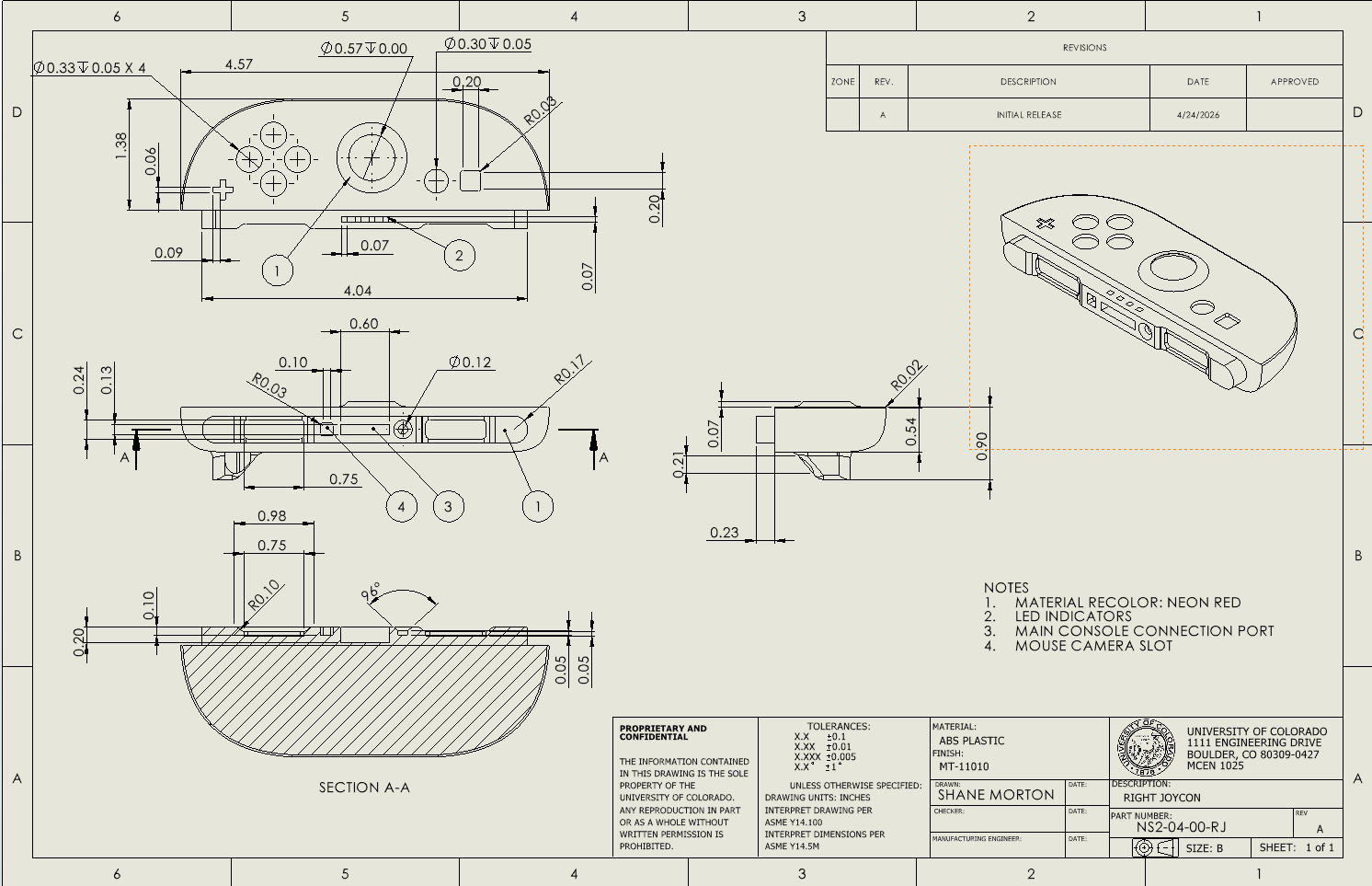
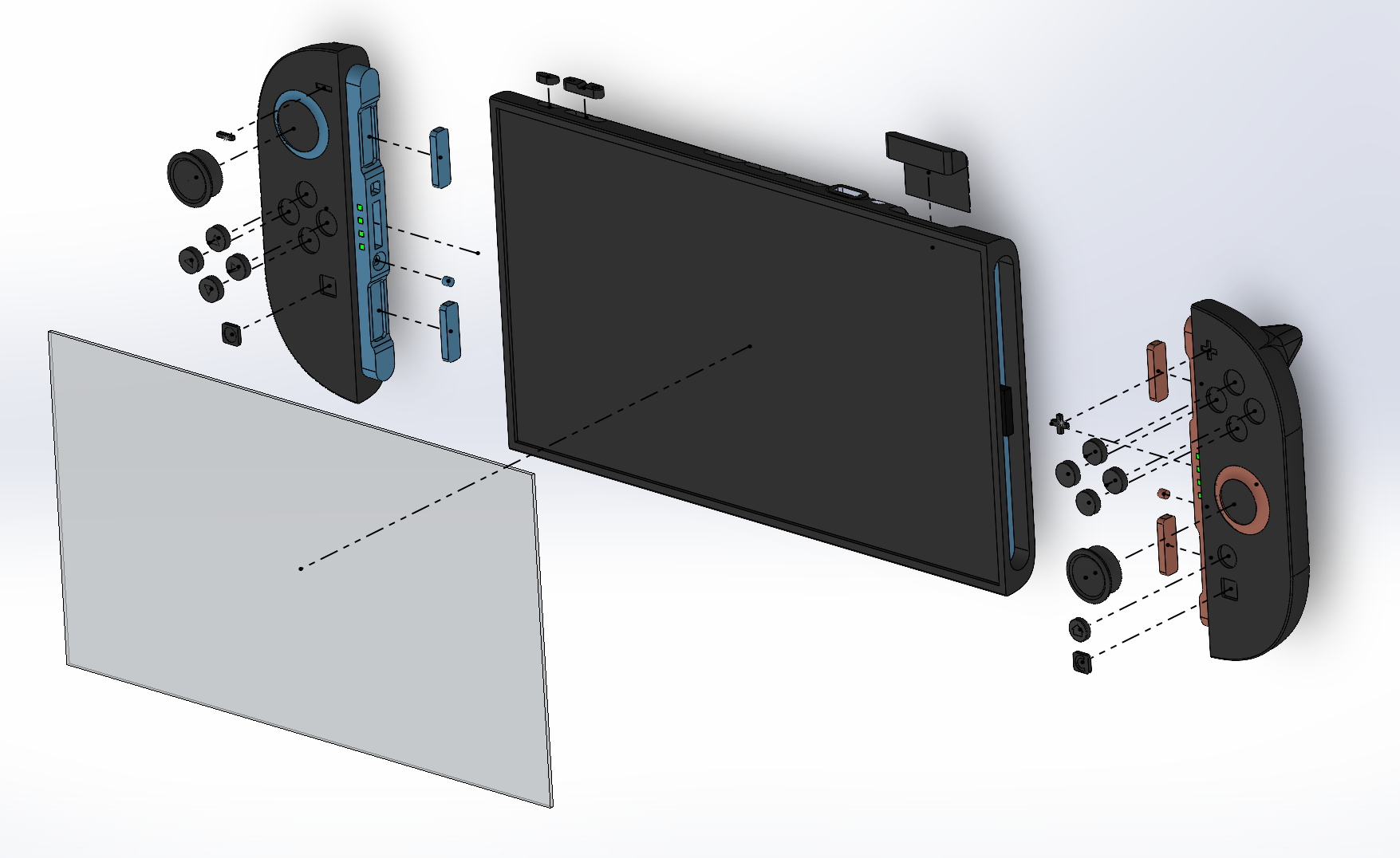
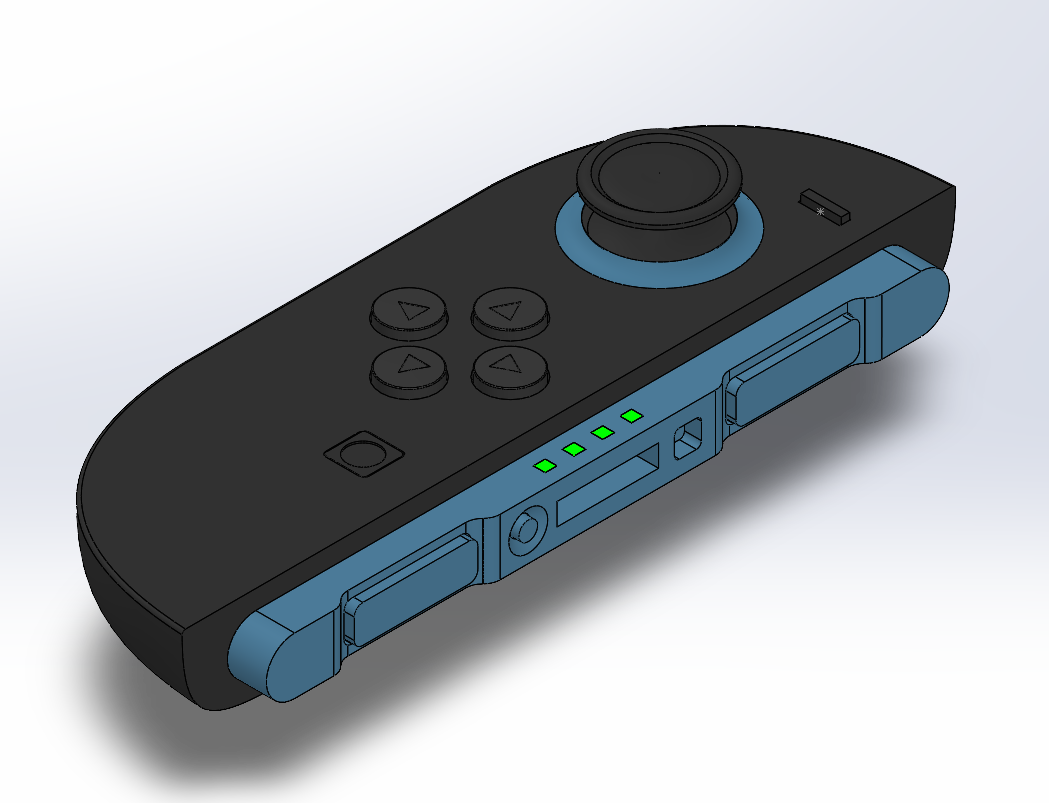
Exploded render of the full Nintendo Switch 2 SolidWorks assembly Rendered CAD model of a Joy-Con style controller Fully dimensioned engineering drawing of the controller

For my Intro to CAD and Fabrication final project, I could model any object of my choice. The brief called for multiple components combined into one assembly, at least one subassembly, fully dimensioned and detailed drawings of every part and assembly, a presentation to the class, and my own document naming conventions.

I chose the Nintendo Switch 2 because it has three obvious subassemblies and would test my weakest skill: modeling smooth, organic shapes.

Result

A nearly identical CAD model of the console, excluding the TV stand, with only slight variance in the rounded-edge measurements.

What I learned

The complex ergonomic geometry of the controllers was, as predicted, the hardest part. It pushed me past the tools I already knew well and into more advanced modeling techniques like surfaces. Drafting got noticeably easier as I worked through all seven drawings, and measuring the console constantly with calipers sharpened that skill too.

CU Intro Engineering Projects — Crowd Count _▢×
September – November 2025 Complete Electronics Lead
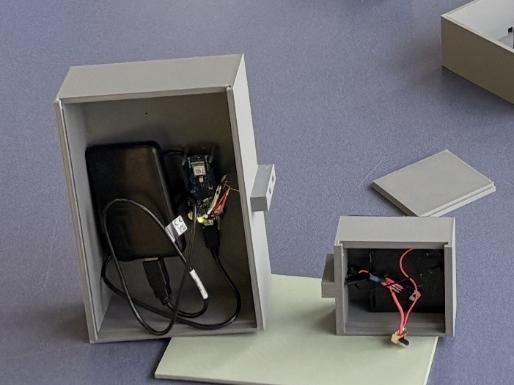
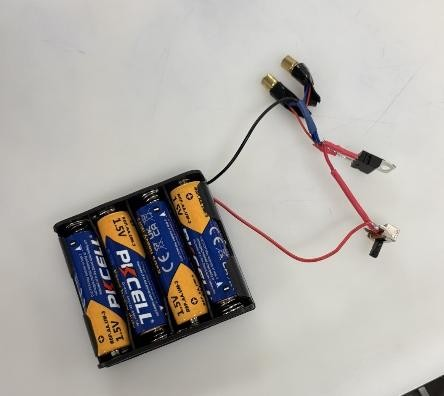
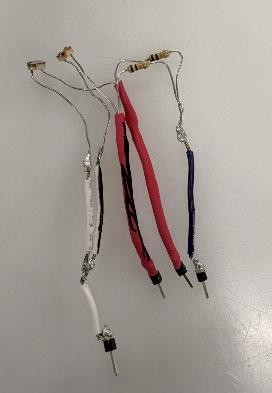
Assembled electronics enclosure for the crowd-counting device Battery pack and wiring for the crowd-counting device Photogate sensor wiring

Our team was asked to identify a problem faced by CU Boulder students and staff, then solve it with an engineering product. The team combined three mechanical, one aerospace, one electrical, and one integrated design student, and the requirements called for Arduino hardware, 3D-printed or machined parts, and integrated electrical components.

A survey pointed us to crowding at places like the Rec Center and the dining halls, so we built a dual-photogate system that counts entrances and exits, sums the total, and uploads it to a database anyone can check before heading over — mounted unobtrusively on a wall, running on an Arduino MKR WiFi 1010.

My roles

  • Electronics Lead: built all wiring and Arduino connections, learning to solder and heat-shrink along the way
  • Component acquisition: sourced everything not provided — lasers, batteries, the Arduino board
  • Co-lead of programming: wrote the code loop sending photogate data to our public database